
Published: 28th April 2026
“Technical credibility gets you in the room. It doesn’t always keep you there.”
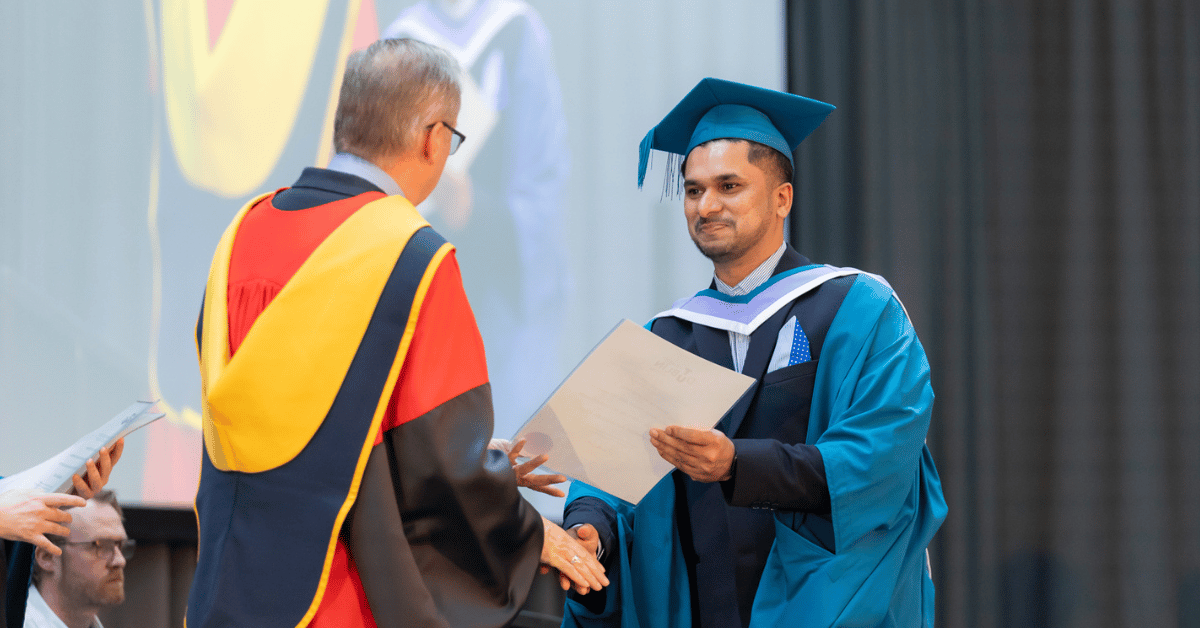
Celebrating its 20th year of shaping Ireland’s tech leaders, the MSc in Leadership, Innovation and Technology continues to be the bridge for those moving from technical delivery to strategic influence. We spoke with Mohammed Azharuddin Khan, Project Manager at Dell Technologies, about his experience graduating in the Class of 2026.
Mohammed had already built a strong technical and delivery background before joining the MSc in Leadership, Innovation and Technology. His career spans project management and engineering leadership roles across Dell Technologies, BP and Goa Electronics Limited, supported by a Bachelor of Engineering and multiple industry certifications across AWS, Microsoft Azure and Scrum.
But as his work moved increasingly into AI-enabled and digital transformation projects, he began to see that technical capability alone would not be enough for the next stage of his career.
“I’d reached a point where I started thinking seriously about what the next phase of my career should look like,” Mohammed says. “While my technical capability was strong, the strategic and leadership dimension felt like an area where on-the-job experience alone wasn’t going to be enough.”
That reflection led him to the MSc in Leadership, Innovation and Technology, a 2-year part-time programme delivered by TU Dublin in collaboration with Technology Ireland ICT Skillnet.
“I didn’t want a generic MBA,” he says. “I wanted something that would speak directly to the world I was already operating in.”
Key Takeaways From Mohammed’s MSc Experience
The MSc helped Mohammed move from a delivery-focused mindset to a more strategic leadership approach. He began to think more deliberately about people, influence, organisational readiness and long-term business value.
His applied research project focused on the challenges project managers face when leading and implementing AI projects. His findings highlighted issues around stakeholder trust, unclear governance and unrealistic expectations, all of which are increasingly relevant as organisations accelerate AI adoption.
For Mohammed, the programme created immediate workplace value. It helped him strengthen stakeholder relationships, ask better questions earlier and connect technical work to strategic outcomes.
Learning to Lead Beyond Delivery
One of the biggest shifts Mohammed experienced was in how he viewed his own leadership style. Before the programme, he says he tended to measure leadership through delivery. If the work was moving forward, he believed he was leading effectively.
“Before the programme, I genuinely believed I was leading well because things were getting delivered,” he says. “Looking back now, I realise I was far too focused on output and not nearly enough on the people behind it.”
That insight became clearer when a project went off course. It was not a major failure, but it forced Mohammed to reflect on issues within the team that had been building over time. The programme gave him the space and structure to examine that experience properly.
“It wasn’t just about learning new models or tools,” he says. “It forced me to reflect on how I actually show up as a leader, rather than how I liked to think I did.”
That reflection changed how he leads today.
“I deal with pressure and conflict directly instead of hoping they will resolve themselves,” he says. “I also pause more before acting. I used to rush into fixing things. Now I’m more deliberate.”
What AI Projects Teach Us About Leadership
As part of the MSc, Mohammed focused his research on the challenges project managers face when leading and implementing AI projects.
“It sounds like a niche topic but it’s actually something a lot of organisations are quietly struggling with right now,” he says. “AI projects don’t behave like traditional IT projects and most PMs, myself included, had to figure that out the hard way.”
Through interviews with practising project managers and supporting survey data, Mohammed identified three recurring challenges: resistance from teams and stakeholders, a lack of clear ownership and governance, and unrealistic expectations about what AI could deliver. His conclusion was direct.
“None of those are purely technical problems,” he says. “They’re people and leadership problems wearing a technology mask.”
For organisations investing in AI and digital transformation, that insight matters. A technically strong project can still struggle if people do not trust it. A promising innovation can lose momentum if ownership is unclear. A transformation programme can fall short if expectations are not grounded in reality.
For Mohammed, the research process changed how he works. “I used to move fast and trust my instincts,” he says. “Now I ask different questions earlier, before a project gets momentum behind the wrong assumptions.”
Bridging Engineering, Strategy and People Leadership
Mohammed’s experience is especially relevant because he was already a highly certified technical professional before joining the programme. He did not need the MSc to prove technical competence. He needed it to help bridge the gap between engineering delivery, innovation strategy and people leadership. The programme helped him learn how to influence without relying only on technical authority.
“In technical delivery, being the person with the answer is often valuable. In leadership, the task changes,” Mohammed says, adding that “Not every conversation needs the most technically correct answer. Sometimes it needs the most human one.”
He knew the shift was working when colleagues began trusting him with decisions beyond technical delivery. “I was being asked to help shape direction, manage risk, and think about organisational readiness,” he says. “That kind of trust doesn’t come from certificates. It comes from how you think, how you communicate, and how you handle uncertainty.”
For companies considering whether to support an employee through the MSc in Leadership, Innovation and Technology, Mohammed’s view is clear. He describes the value as getting a more rounded employee who can move confidently between senior leadership discussions and technical delivery teams. Someone who can sit in a senior leadership room and have a credible conversation about strategy, trade-offs, and direction, and then walk back to a technical team and translate that into clear priorities, decisions, and action without losing people along the way.
For employers, this is where the programme can create meaningful return. It helps develop professionals who can connect technology, people and strategy, while bringing stronger decision-making to complex transformation work.
Join the Next Generation of Tech Leaders
As the MSc in Leadership, Innovation and Technology enters its third decade, the message remains clear: the next stage of your career growth isn’t always about another technical certification. It’s about learning how to lead the people and decisions that make technology matter.
Ready to transition from technical delivery to strategic impact?

Frequently Asked Questions About the MSc in Leadership, Innovation and Technology
The programme is designed for experienced professionals working in technology or technology-led roles who want to build leadership, innovation and strategic capability while continuing to work. It is particularly relevant for professionals moving from technical delivery into broader leadership, transformation, innovation or strategic roles.
Yes. Mohammed’s experience shows how the programme can support professionals who already have strong technical or project delivery experience but want to develop the skills to influence strategy, lead people and manage complex change. The programme is especially relevant for professionals who need to connect technical expertise with business outcomes.
Learners can use the applied research element of the programme to examine real organisational challenges connected to their own work. Mohammed focused his research on the leadership and project management challenges involved in implementing AI projects, including stakeholder trust, governance and unrealistic expectations.
Employers can gain a more strategic, rounded leader who can connect technical delivery with business priorities, stakeholder engagement and long-term organisational value. The programme can help organisations strengthen internal leadership capability among professionals who already understand technology and delivery environments.
The MSc in Leadership, Innovation and Technology is a 2-year part-time programme delivered in a blended format by TU Dublin, with subsidised funding from Technology Ireland ICT Skillnet. The format is designed to support experienced professionals who want to continue working while developing advanced leadership and innovation capability.