
Date published: 20th May 2026
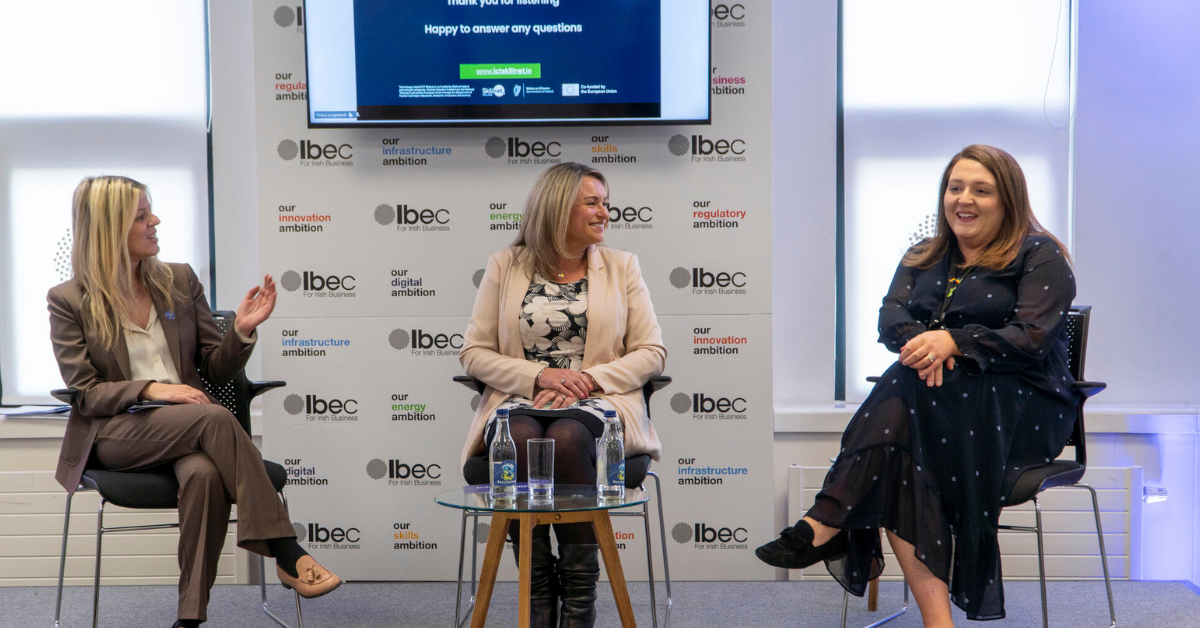
Technology Ireland ICT Skillnet Network Director, Susan Kelly, joined European technology and industry leaders in Dublin last week (11th and 12th May) to discuss how Ireland’s approach to upskilling and reskilling can support Europe’s wider digital competitiveness agenda.
The DIGITALEUROPE National Trade Association Summit took place in Dublin at a significant moment, as Ireland prepares to hold the Presidency of the Council of the European Union from July to December 2026. The two-day gathering brought together national technology associations, policy leaders and industry representatives from across Europe to examine the priorities that should shape the next phase of Europe’s digital agenda.
While much of the summit focused on regulatory simplification, investment and Europe’s ability to scale innovation, the workforce dimension was also central. Digital transformation is advancing quickly, but Europe’s capacity to respond will depend on whether its people, businesses and skills systems can keep pace.
Shifting Focus from Policy to Practical Workforce Execution
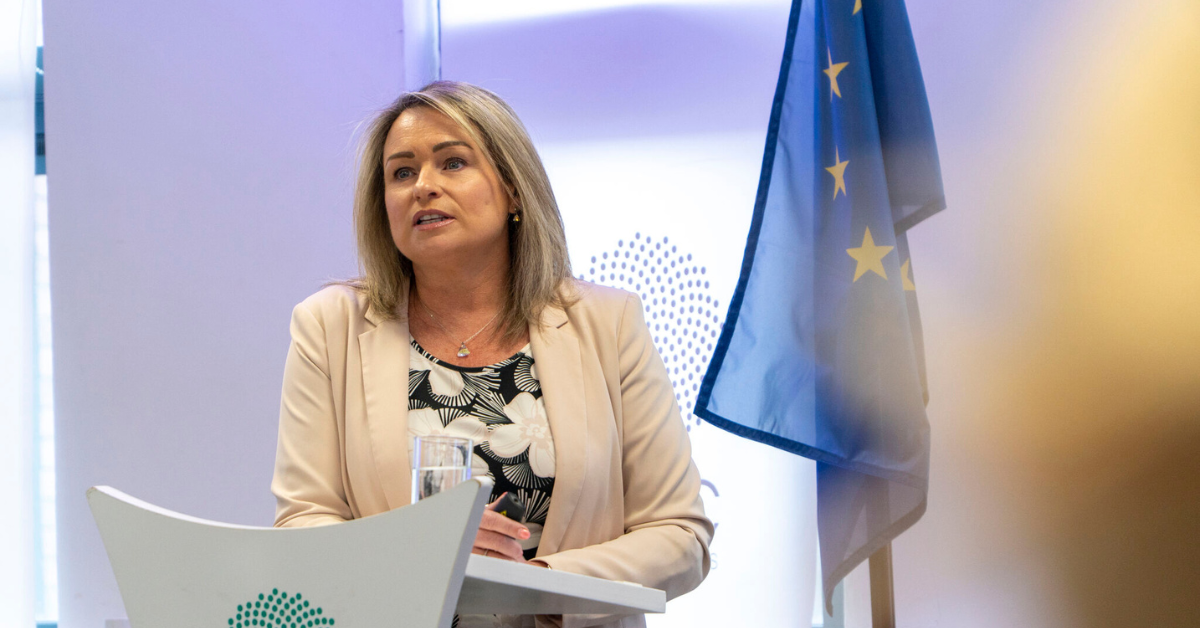
As part of the summit programme, Susan presented on Ireland’s approach to upskilling and reskilling. Her session introduced attendees to the Skillnet Ireland model and outlined how Technology Ireland ICT Skillnet applies that model in practice to support the evolving skills needs of Ireland’s technology sector. This was especially valuable for an international audience that was less familiar with Ireland’s enterprise-led approach to workforce development.
Susan’s presentation placed the skills challenge in clear context. Citing the World Economic Forum’s Future of Jobs Report 2025, she highlighted that employers expect 39% of key skills required in the labour market to change by 2030, while 59% of the workforce will require upskilling or reskilling within the same period.
The implication is stark: Europe’s digital ambitions cannot be separated from its talent strategy. Investment, policy and emerging technologies matter, but they will only deliver full value when supported by a workforce that is equipped to adapt, lead and apply change.
Why Ireland’s talent model matters
A core message from the presentation was that Ireland’s competitive advantage is not only rooted in talent itself. It lies in how the country coordinates across government, enterprise and the education system to develop talent in a structured, responsive way.
Susan outlined the role of Skillnet Ireland as the national agency for workforce development, recognised by the European Commission and OECD as a best practice model. She also explained how its model combines public investment, employer contribution and industry-led delivery through networks that are close to real business needs.
The scale of that work is significant. In 2024 alone, Skillnet Ireland supported more than 24,000 companies, upskilled over 90,000 workers and delivered €76 million in programmes co-invested with industry.
For European stakeholders considering how to strengthen competitiveness, the Irish model offers a practical example of how workforce systems can be designed to remain closely aligned with economic and technological change.
Technology Ireland ICT Skillnet as a model in action
Susan used the session to demonstrate how the Skillnet Ireland model operates on the ground through Technology Ireland ICT Skillnet. The Skillnet Business Network works with companies, higher education institutions and specialist training partners to deliver skills initiatives in areas that are critical to the future of the technology sector.
These include artificial intelligence, cybersecurity, data analytics, cloud, software architecture, quantum, leadership, innovation and transformation.
The presentation also highlighted Technology Ireland ICT Skillnet’s role in supporting bespoke enterprise training initiatives. These interventions begin with a defined business or workforce challenge and are shaped into targeted solutions with the right external expertise.
This practical, industry-connected approach was central to the session. It showed that workforce development is most powerful when it is not treated as a standalone policy objective, but as a direct response to real business transformation.
Placing skills at the heart of digital ambition
Susan’s summit contribution reinforced a clear message: digital transformation is ultimately a people challenge as much as a technology challenge.
The presentation closed on four features of the Skillnet Ireland model that have particular relevance for wider European debate:
- Industry must be structurally embedded in skills development
- Co-investment helps ensure relevance
- Networks enable speed and scale
- Skills systems must serve the existing workforce, not only those entering employment for the first time
These principles will only become more important as Europe looks to strengthen its competitiveness in a rapidly changing global environment. For Technology Ireland ICT Skillnet, the summit was an important opportunity to share Ireland’s experience, contribute to a timely European policy discussion and underline the central role that upskilling and reskilling must play in the future of digital growth. As Ireland prepares for its EU Presidency, the skills agenda deserves a prominent place in that conversation. Europe’s digital future will be shaped not only by the technologies it develops, but by the capability of its workforce to use them well